
Headlamp hands free work is the fastest way to stop fighting your own tools during repairs, because you get steady light exactly where you look, without tying up a hand or balancing a phone on a paint can.
If you do any kind of DIY, automotive work, HVAC checks, or quick fixes around the house, lighting is usually what slows you down, not skill. Shadows hide fasteners, glare washes out details, and a handheld flashlight turns every “two-minute job” into a juggling act.
This guide stays practical: what actually matters in a work headlamp, how to match features to repair scenarios, and a few setup habits that reduce eye strain and prevent annoying slip-ups.

Why repairs feel harder without a hands-free headlamp
A headlamp changes the whole workflow because the beam tracks your line of sight. That sounds obvious, but in repair work it solves a few repeat problems people rarely name.
- Shadow control: a handheld light often comes from the side, so your own hands block the view right when you need it most.
- Better positioning: you can hold parts in place, keep one hand on a ladder, or steady yourself in a crawlspace.
- Fewer drops and “oops” moments: less fumbling means fewer stripped screws, broken clips, and lost hardware.
- Consistent inspection: for diagnosing leaks, cracks, corrosion, or wiring issues, stable lighting matters more than brightness spikes.
According to OSHA, poor lighting is a common contributor to workplace incidents, and the guidance around illumination levels is often framed as basic risk control. You might be doing home repairs, not a jobsite, but the principle holds: you see hazards sooner when lighting stays consistent.
Quick self-check: what kind of repair lighting do you actually need?
Before shopping, decide what your “normal” repair looks like. A camping headlamp can work in a pinch, but repair tasks tend to demand different beam behavior and durability.
Pick the scenario(s) that match you
- Close-up detail (6–18 inches): under-sink plumbing, outlet swaps, electronics, appliance panels.
- Medium-range work (2–10 feet): garage projects, breaker panel checks, attic walking.
- Wide-area movement: crawlspaces, jobsite cleanup, basement navigation during outages.
- Dirty or wet environments: engine bays, exterior repairs, rainy conditions, dusty renovations.
Two fast questions that save money
- Do you get annoyed by “tunnel vision” beams? You probably want a flood option.
- Do you need to spot a specific fastener deep in a corner? You probably want a spot option, at least sometimes.
If you’re still unsure, default to a headlamp with both spot and flood modes. It covers more repairs with fewer compromises.
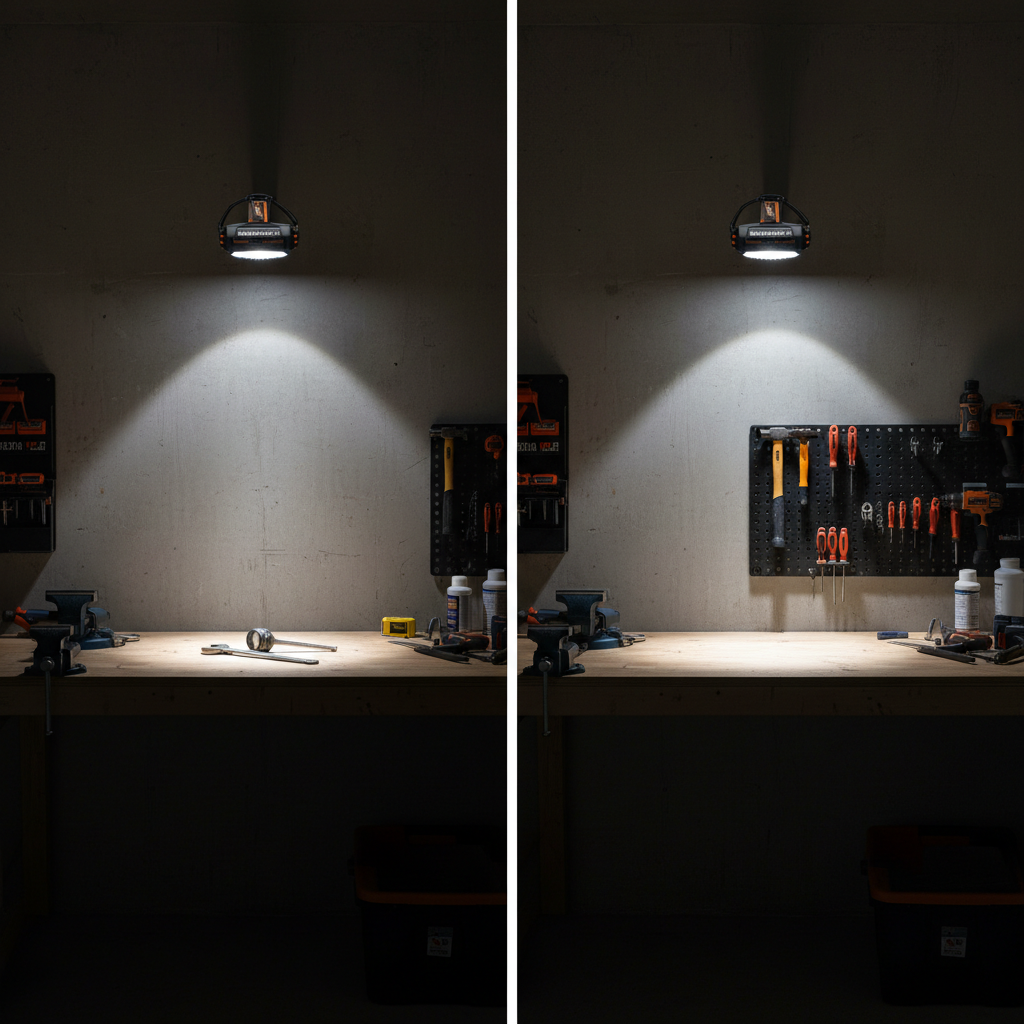
Key features that matter for headlamp hands free work (and what to ignore)
Marketing tends to scream “max lumens,” but repairs reward control, comfort, and reliability more than raw output.
Beam pattern: flood, spot, or hybrid
- Flood: wide, even light for close work and walking, reduces harsh shadows.
- Spot: narrower beam for distance or pinpointing a part number, screw head, or leak source.
- Hybrid: mixes both, usually the best all-around choice for home and vehicle repairs.
Brightness levels you can actually use
Multiple steps matter because what feels perfect at a workbench can be blinding under a sink. Look for low and medium settings that are comfortable for 20–40 minutes at a time.
Color quality and temperature
- Neutral white often feels more natural for identifying wire colors and stains.
- Very cool beams can make some surfaces look washed out, which can be annoying for detail work.
Some headlamps list CRI (color rendering index). Higher CRI can help with accurate color recognition, though the spec is not always provided or comparable between brands.
Comfort and stability on your head
- Balanced weight: front-heavy units tend to bounce when you lean into a task.
- Band design: a top strap helps for longer sessions, especially if the light is heavier.
- Tilt range: you want enough angle to light a work surface without bending your neck.
Durability: water, dust, and impacts
For repairs, a bit of ruggedness goes a long way. If you work around moisture or grime, an IP rating helps, and impact resistance matters if the headlamp gets knocked off a shelf.
How to choose: a practical comparison table
This is the “editor shortcut” version. Match your most common repairs to the feature set, then narrow choices inside that lane.
| Repair scenario | Beam preference | Battery preference | Comfort priority | Nice-to-have |
|---|---|---|---|---|
| Under-sink plumbing, outlets, appliance panels | Flood or hybrid | Rechargeable for frequent use | Lightweight, wide strap | High CRI or neutral-white option |
| Auto repairs in engine bay | Hybrid with strong spot | Rechargeable + battery indicator | Stable fit, easy tilt | Oil/grime resistant housing |
| Attic/crawlspace work | Flood with usable medium mode | Long runtime (either type) | Top strap helps | Water/dust rating (IP) |
| Occasional emergency + quick fixes | Hybrid | Replaceable batteries for storage | Simple controls | Lockout mode to prevent turning on in a drawer |
Setup and use: small habits that make a big difference
Even a great headlamp can feel “wrong” if it’s aimed poorly or used at full blast all the time. These small adjustments make headlamp hands free work feel cleaner and less tiring.
Aim first, then tighten
- Angle the lamp so the hotspot lands where your hands will be, not where your eyes sit.
- Then snug the band. Over-tightening usually causes forehead pressure and headaches.
Use the lowest mode that still reads detail
Lower brightness often reduces glare off chrome, white PVC, glossy paint, and wet surfaces. Your eyes stay calmer, and you’re less likely to miss fine texture.
When shadows fight you, change the beam, not your body
- Switch to flood for close work when your hands block the light.
- Switch to spot when you need to “reach” into a recess or check alignment.
Battery management that prevents mid-job failure
- If you go rechargeable, charge after longer sessions, not right before a job when you’re already in a rush.
- If you store it for emergencies, consider models that accept standard batteries and keep spares in the same drawer.

Safety notes and common mistakes to avoid
A headlamp is simple gear, but repairs combine electricity, sharp edges, chemicals, and awkward positions. Keep expectations realistic and avoid the usual pitfalls.
- Don’t use max brightness by default: glare can hide cracks and fluid sheen, and it can irritate your eyes over time.
- Watch heat and ventilation: if you work in tight spaces, overheating discomfort can build up; take breaks.
- Be careful around spinning parts: in automotive work, secure straps and keep your head away from belts or fans.
- Mind electrical work: lighting helps, but it does not reduce electrical risk. If you’re uncertain, stop and consult a licensed electrician.
- Avoid “strobe” near others: flashing modes can bother people nearby and may be unsafe for some individuals; many headlamps let you disable it.
According to NFPA, electrical safety and home fire prevention guidance often emphasizes reducing risk through proper equipment use and caution around energized systems. If a repair involves a panel, unknown wiring, or signs of overheating, it’s reasonable to bring in a professional.
When you should consider professional help (even with better lighting)
Good light makes you more accurate, but it can also reveal issues you don’t want to “DIY through.” These situations usually justify a pause.
- Burning smell, melted insulation, or buzzing around outlets, switches, or panels.
- Gas-related work or any suspected gas leak, where a qualified technician is the safer move.
- Structural concerns like sagging joists, significant water damage, or mold growth, where diagnosis matters as much as repair.
- Repeated failures: if the same breaker trips, the same leak returns, or a repair keeps “almost working,” there may be an underlying cause.
Key takeaways you can act on today
- Headlamp hands free work helps most when you match beam type to task: flood for close detail, spot for distance, hybrid for mixed repairs.
- Comfort and aim matter as much as brightness, especially for longer sessions.
- Pick a battery strategy that fits your routine: rechargeable for frequent work, replaceable batteries for long-term storage.
- If a repair touches electrical panels, gas, or major water damage, better lighting helps you assess, but a pro may still be the right call.
If you want one simple next step, walk through your most common repair spot, under the sink, garage bench, attic access, and note where shadows slow you down. Then choose a work headlamp that solves that exact problem instead of chasing the biggest lumen number.
FAQ
What brightness is “enough” for repair work?
Enough usually means you can see texture and edges without glare. Many people end up living on low-to-mid settings for close work, saving higher output for scanning a larger area.
Is a wide flood beam better than a spotlight for DIY?
For most home repairs, flood feels easier because it reduces harsh shadows at arm’s length. A spotlight becomes valuable when you’re reaching into deep corners or checking something several feet away.
Rechargeable or battery-powered: which is better for a work headlamp?
Rechargeable fits frequent use because you top up and go. Replaceable batteries can be more dependable for emergency storage, since you can swap cells instantly if you forget to charge.
Why does my headlamp create glare on pipes and metal parts?
Glossy surfaces reflect a tight hotspot. Dropping brightness, switching to flood, or changing the tilt angle a few degrees often fixes it faster than moving your whole body.
What makes a headlamp comfortable for long repairs?
Low weight, a strap that doesn’t pinch, and a stable housing that doesn’t bounce when you look down. A top strap can help if the lamp is heavier or you move a lot.
Do I need a red light mode for repairs?
Usually not. Red can be useful for preserving night vision, but most repair tasks benefit more from a comfortable white beam with good control at lower levels.
Is it safe to use a headlamp for electrical work?
A headlamp can improve visibility, but it does not make electrical work inherently safe. If you’re not confident about de-energizing circuits or verifying power is off, it’s wise to consult a licensed electrician.
If you’re already doing regular repairs and you want a more “set it and forget it” setup, look for a work-focused headlamp with a stable strap, a true flood option, and a battery system that matches how you actually work, it tends to feel like a small upgrade that saves time every week.