
how to change a reciprocating saw blade quickly comes down to two things most people skip: making the saw truly safe first, and understanding what blade clamp you have so you don’t wrestle it for five minutes.
If you’ve ever tried to swap blades mid-project, you know the pain points, hot blade, tight clamp, gloves that reduce feel, and that moment you realize your “universal” blade isn’t seating. The good news is the process is usually simple once you build a repeatable routine.
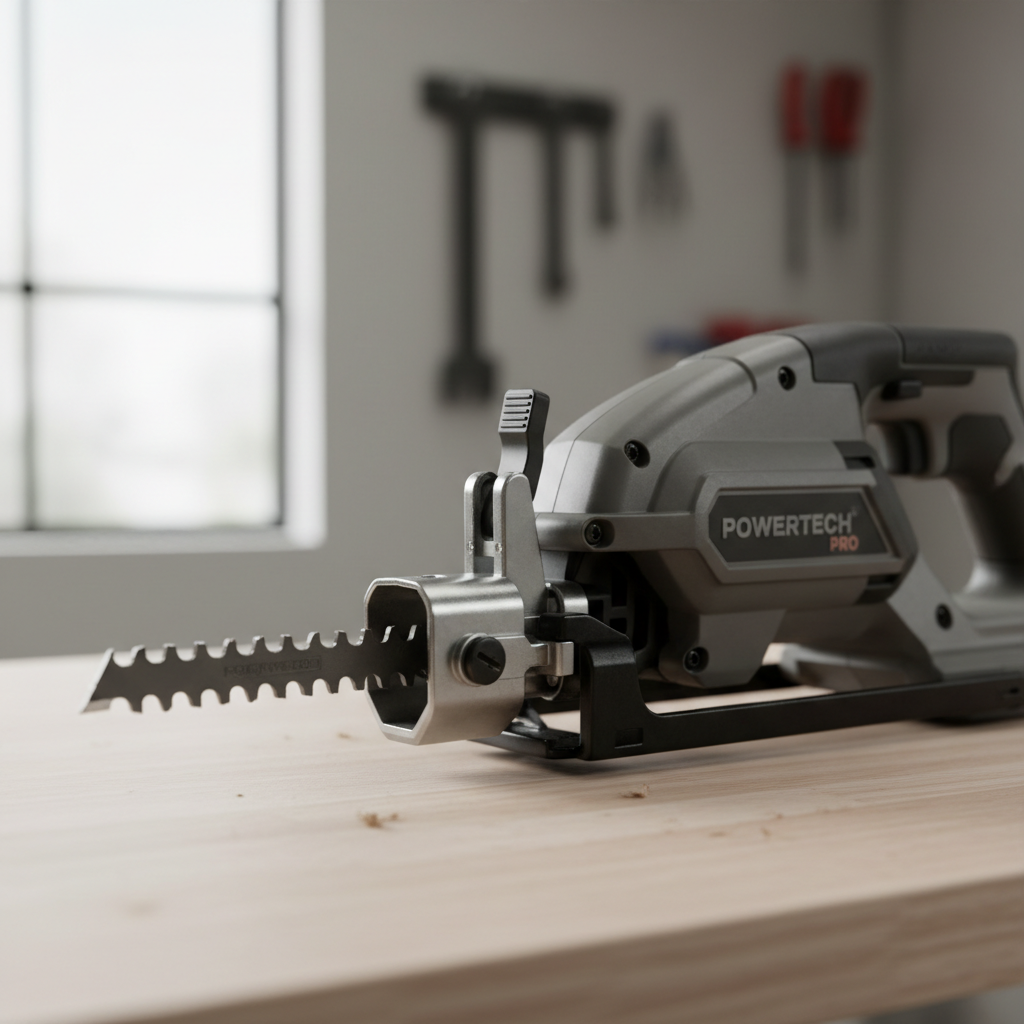
This guide covers the fastest safe method, what to do when a blade gets stuck, and how to choose the right blade so you’re not changing it again in ten minutes. You’ll also get a quick checklist and a comparison table for clamp styles.
Before you touch the blade: quick safety steps that save time
Most blade-change “problems” start because the saw is still powered, the blade is still hot, or the tool is sitting in a bind. Take 20 seconds here and you usually save 5 minutes later.
- Unplug or remove the battery, don’t rely on the trigger lock alone.
- Wait for the blade to cool if you were cutting metal or thick material, heat can make parts expand and feel stuck.
- Set the saw on a stable surface, shoe down, blade pointing away from you.
- Gloves and eye protection, especially if you’re removing a snapped blade or one with sharp burrs.
According to OSHA, maintaining tools and following manufacturer instructions helps reduce injury risk on job sites. Even in a home shop, the same habit keeps things predictable.
Know your clamp type: why some swaps take 10 seconds and others take 60
Reciprocating saws typically use a tool-less clamp, but “tool-less” does not mean “all the same.” The release method changes how you position your hands and how you relieve pressure on the mechanism.
Common blade clamp styles (and what to expect)
| Clamp style | What you do | Typical speed | Common snag |
|---|---|---|---|
| Twist collar (front ring) | Twist collar, insert/remove blade | Fast once you learn it | Collar hard to twist with gloves |
| Lever release | Flip/hold lever open, swap blade | Very fast | Lever won’t open if blade is bound |
| Push-button release | Press button, pull blade out | Fast | Sawdust or metal chips jam button |
| Hex screw clamp (older models) | Use Allen key, loosen/tighten | Slower | Stripped screw, lost key |
If you’re not sure which one you have, look at the nose of the saw, you’ll usually see a rotating collar, a lever, or a button near the blade entry point.
How to change a reciprocating saw blade (fast, step-by-step)
If you want the quick version, this is the repeatable routine. It works for most tool-less clamps with minor differences in the release action.
- Power off fully: battery out or cord unplugged.
- Open the clamp: twist collar, hold lever, or press button.
- Remove the old blade: pull straight out. If it drops out by gravity, let it fall onto a safe surface.
- Insert the new blade until it seats: push in firmly. Many clamps “click” or spring back.
- Confirm lock: tug the blade gently to verify it’s captured.
- Reinstall power and test: a quick trigger tap while the saw is pointed away confirms the blade tracks straight.
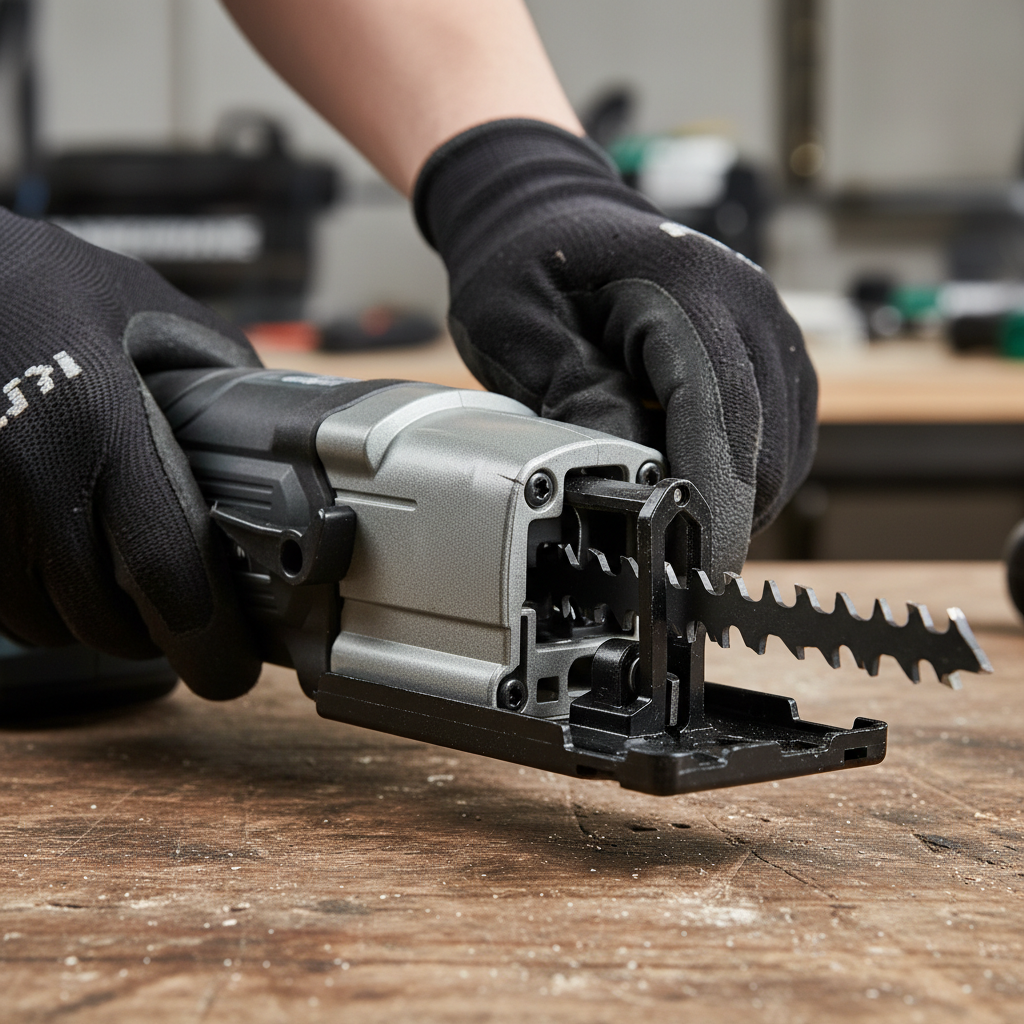
Key point: if the clamp doesn’t return to its “closed” position by itself, don’t assume it’s locked. Re-open, reseat the blade, and try again. A half-seated blade is how you end up with a wobbling cut and a chewed-up mount.
Quick self-check: are you doing the “slow swap” things without realizing?
When people ask how to change a reciprocating saw blade faster, they usually have one of these friction points. Run through this list once and you’ll find your bottleneck.
- You’re leaving the battery in “just for a second.”
- The blade is hot and you’re trying to muscle it out instead of letting it cool briefly.
- The blade is under side-load because the shoe or material is pinching it.
- You’re inserting the blade at a slight angle so it never fully seats.
- The clamp area is packed with dust, wood chips, or metal shavings.
- You’re using the wrong shank style or a bent blade that won’t slide cleanly.
Fixing any one of those tends to make the whole process feel “tool-less” again.
Stuck blade? Here’s what usually works (without breaking the clamp)
Blades get stuck for boring reasons, heat, debris, or tension in the mechanism. The mistake is yanking harder, which can deform the blade tang or stress the clamp.
Step-by-step for a stuck blade
- Remove power again, even if you already did.
- Relieve bind: if the blade is still in the cut, back the saw out so the shoe isn’t twisting the blade.
- Hold the release fully open for 2–3 seconds, some clamps need full travel.
- Wiggle, don’t yank: small left-right movement while pulling straight out.
- Clear debris: tap the nose lightly and blow out the clamp area; a small brush helps more than fingers.
- Use penetrating oil sparingly if you suspect rust or packed metal chips, then wipe excess and keep it off grips.
If the blade snapped and the stub is stuck inside, needle-nose pliers can help, but go slow. In some situations, you may need a service tech, especially if the release feels gritty, jammed, or uneven.
Blade orientation and selection: the “less changing” way to go faster
Speed isn’t only about the swap, it’s also about avoiding unnecessary swaps. The wrong blade burns out quickly, wanders, or bogs down, and you’re back at the clamp again.
Orientation basics
- Teeth direction: many saws accept blades teeth-up or teeth-down. Teeth-down often feels more controlled for plunge cuts; teeth-up can help in some overhead situations. Check your saw manual because not every clamp supports every orientation.
- Use the shoe: keeping the shoe against the work reduces vibration, which helps the blade last longer.
Quick blade-pick cheat sheet
- Wood demo with nails: bi-metal “demolition” style blades often hold up better than basic wood blades.
- Clean wood: higher TPI can cut smoother but may feel slower.
- Metal: use a metal-rated blade; forcing a wood blade here is a fast route to heat and dull teeth.
- Pruning: dedicated pruning blades usually clear green wood better than standard profiles.
According to the tool manufacturer’s manual for your model, blade type and installation method can vary, and that guidance should be your tie-breaker if something feels off.
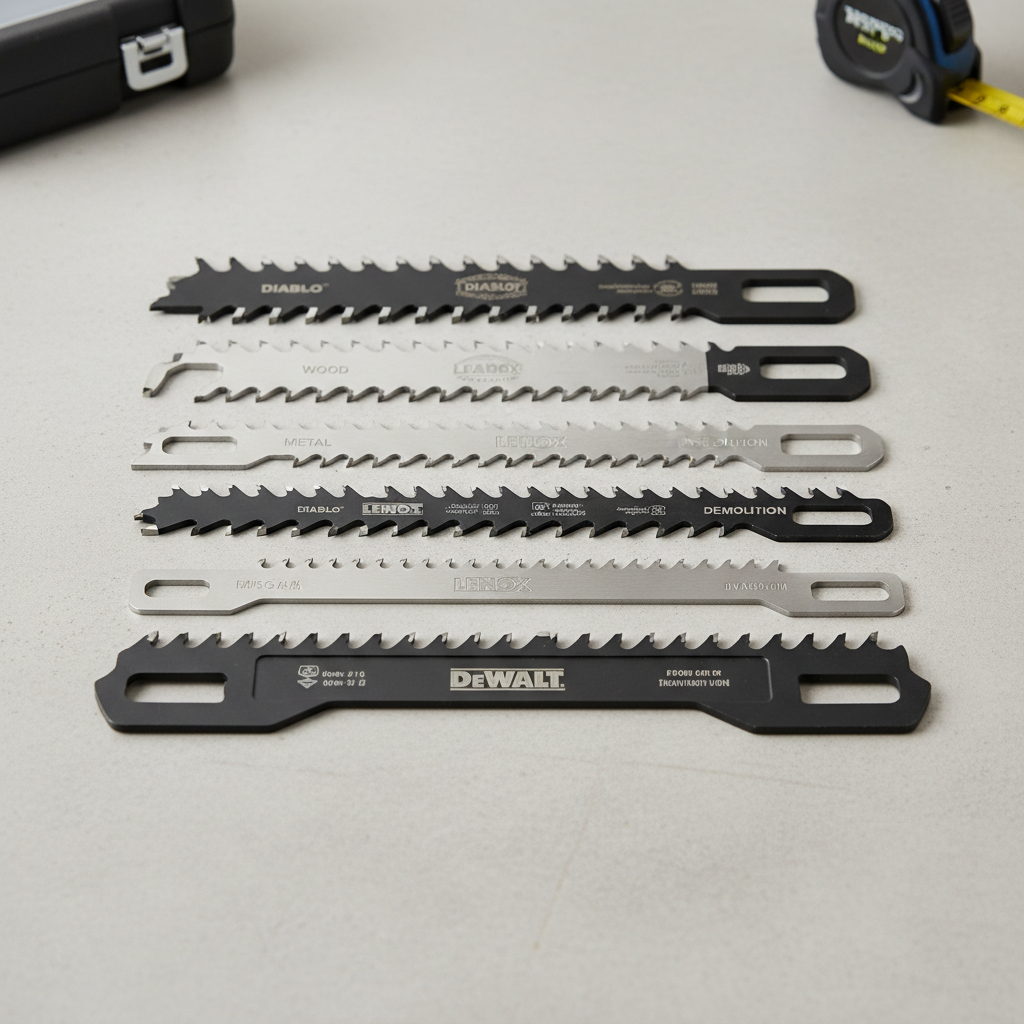
Key point: a blade that’s even slightly bent can feel like a clamp issue. If insertion suddenly gets “tight,” swap to a fresh blade before blaming the tool.
Common mistakes that slow you down (and how to avoid them)
- Changing blades while the saw is twisted: set it down, align the blade straight with the clamp, then release.
- Not cleaning the clamp area: quick brushing after dusty cuts prevents jams later.
- Skipping the tug test: if it’s not locked, it’s not a time saver, it’s a rework guarantee.
- Over-oiling: too much lubricant traps dust and turns into grime.
- Using one “do-everything” blade: it works until it doesn’t, then you lose time to slow cutting and extra swaps.
When to get help or service the saw
If you consistently struggle with how to change a reciprocating saw blade even after cleaning and using the right blades, the clamp may be worn or damaged. That happens, especially with heavy demolition work.
- The release collar/lever feels loose, gritty, or doesn’t spring back.
- Blades eject during use or won’t lock reliably.
- You see cracks, missing parts, or obvious deformation near the clamp.
- The saw has been dropped and the nose looks slightly out of alignment.
In those cases, checking your warranty terms or visiting an authorized repair center is usually safer than forcing the mechanism. If you’re on a job site with higher risk, it’s smart to consult a qualified supervisor or tool tech.
Practical “fast swap” routine you can actually remember
Here’s the short routine many people end up using once they’re tired of fighting blade changes.
- Battery out, always.
- Saw flat on bench, clamp facing you.
- Release fully open, don’t half-toggle it.
- Insert until it clicks, then tug test.
- Quick clamp wipe every few swaps, especially after metal.
If you do that consistently, blade changes stop being a project-killer and start feeling like part of the flow.
Conclusion: fast blade changes are mostly about setup, not strength
how to change a reciprocating saw blade fast is less about having “strong hands” and more about removing power, keeping the saw unbound, fully opening the release, and making sure the blade seats cleanly. Do the tug test, keep the clamp area reasonably clean, and pick blades that match the material so you don’t have to swap constantly.
If you want a simple next step, practice two blade swaps on an unplugged or de-batteried saw before your next project, then add a small brush to your tool bag so the clamp stays clean when it matters.