
magnetic pickup tool small is the quickest way to rescue a dropped screw when it disappears under an engine bay, inside a cabinet frame, or behind a workbench leg.
If you do any DIY, automotive work, PC building, or maintenance at a job site, you already know the real cost of “one tiny screw” falling somewhere inconvenient: time, frustration, and sometimes a rattling noise you can’t un-hear. A compact magnetic retriever is a small purchase that often saves a big cleanup.
But not every tool in this category performs the same. Some are great for tight spots but weak on pull, others grab well but won’t fit where the screw landed. Below is a practical guide to choosing a small pickup magnet and using it without making a mess or damaging nearby parts.
Why screws go missing (and why small tools matter)
In most garages and shops, “lost” screws aren’t truly lost, they’re just parked in a spot your fingers can’t reach. Tight clearances are the main reason a compact tool wins over a larger wand.
- Restricted access: behind HVAC ducts, under appliances, between brake components, inside desk drawers with rails.
- Low visibility: the screw slides into shadows, especially on black plastic panels or dark carpet.
- Deflection and bounce: small fasteners ricochet off brackets, wiring looms, or studs and change direction.
- Magnet-sensitive clutter: nearby washers, shavings, staples, or other hardware can “steal” the magnet’s attention.

What to look for in a magnetic pickup tool small
A good compact retriever balances reach, control, and magnet strength. The “best” one depends on where you drop things most often: carpet, metal trays, machinery, or electronics.
Key features that actually affect performance
- Tip diameter: smaller tips fit into narrow channels and around fasteners, but can have less contact area.
- Magnet type: many compact tools use neodymium magnets for stronger pull in a small footprint.
- Reach and rigidity: telescoping shafts reach deep, while semi-flex tools snake around obstacles; each has trade-offs.
- Control at the tip: a swiveling head can help align to a screw, but too much wobble feels sloppy in tight spots.
- Handle grip: sounds minor, but oily gloves and smooth handles are a bad combo.
Quick comparison table
| Type | Where it shines | Common downside |
|---|---|---|
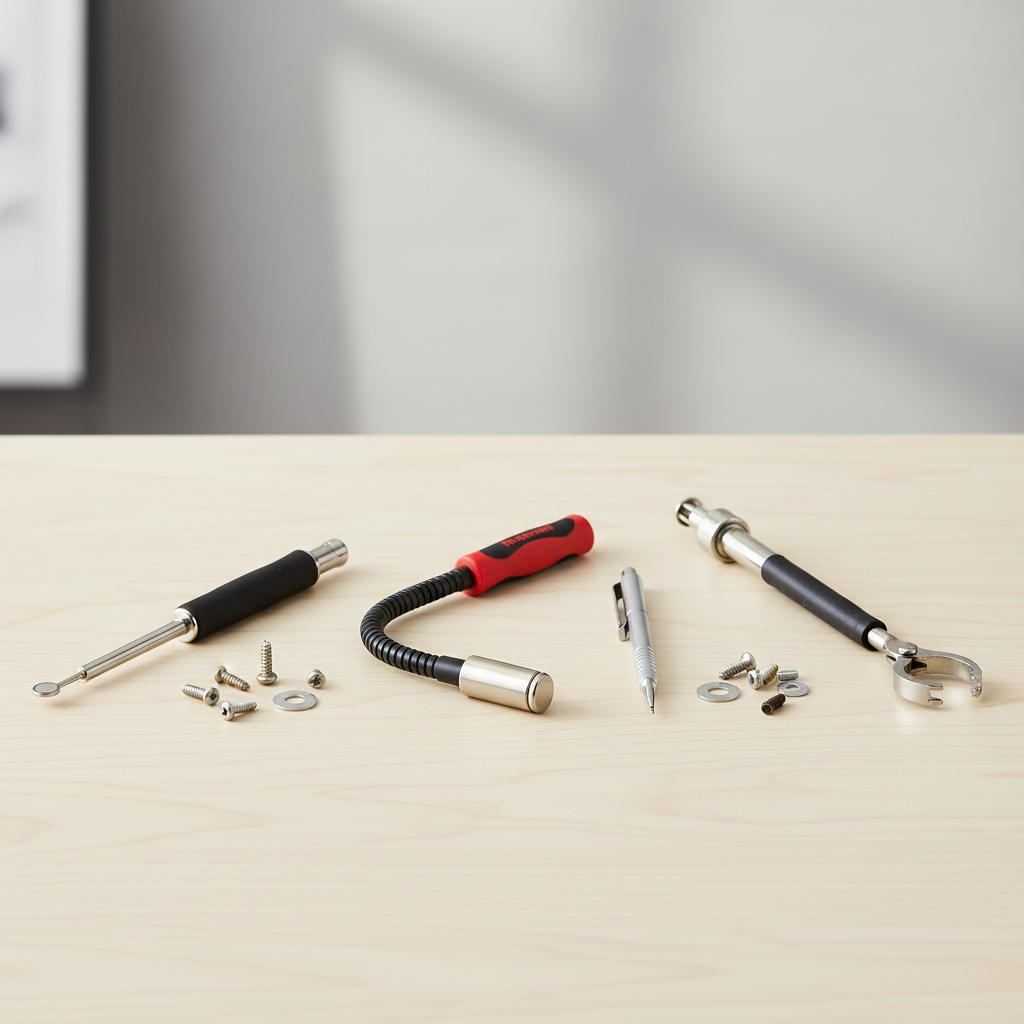
| Compact telescoping | Deep gaps, straight-line access (engine bays, behind appliances) | Can struggle when you must bend around obstacles |
| Flexible shaft (small head) | Curved paths, around pipes/wiring, inside cabinets | Less precise “push” control, may feel floppy |
| Micro pen-style magnet | Electronics benches, small screws, tight assemblies | Often limited pull for heavier bolts or washers |
| Magnetic claw + magnet combo | Non-magnetic items (plastic clips) or mixed debris | Bulkier tip, harder to fit into narrow gaps |
A fast self-check: which tool do you actually need?
Before you buy, think about the last three times you dropped hardware. That pattern usually points to the right style.
- If you often work under a hood or behind appliances, a compact telescoping tool is usually the most efficient.
- If your losses happen inside cabinets, furniture frames, or around plumbing, a flexible shaft often wins.
- If you build PCs, repair small devices, or handle tiny fasteners, look for a micro or pen-style pickup with a narrow tip.
- If you routinely drop stainless or non-magnetic parts, consider a small claw tool as a backup.
How to retrieve a lost screw without making it worse
The biggest mistake is rushing and sweeping the area with a strong magnet, especially around metal shavings or other loose hardware. You can accidentally create a “magnet snowball” that blocks the tip or scratches surfaces.
Step-by-step technique (works in most tight spaces)
- Pause and listen: if the screw is still moving, the final landing spot may be a few inches away from where you think.
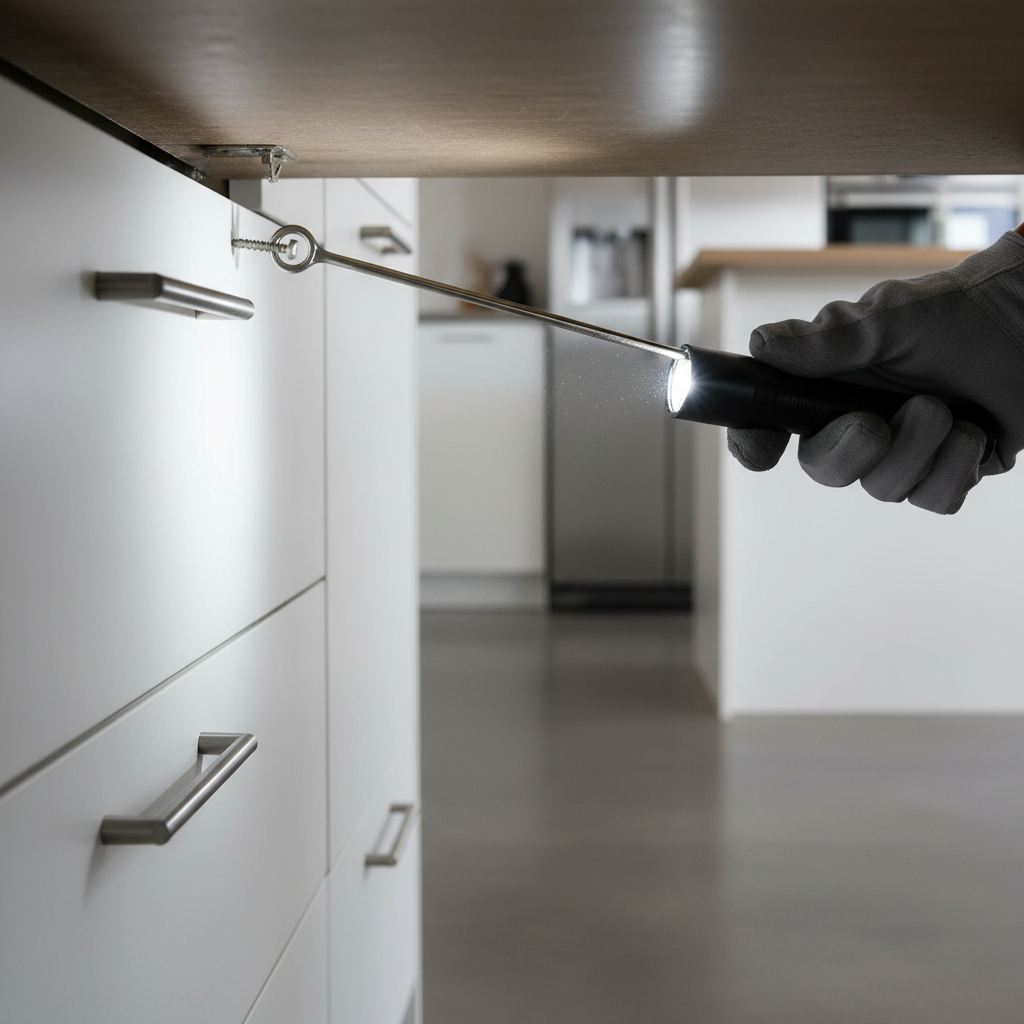
- Improve visibility: use a flashlight at a low angle; shadows reveal the screw outline faster than overhead light.
- Approach slowly: bring the tip in from the side rather than straight down, especially near wiring and sensors.
- Use “tap control”: small, controlled taps against a nearby surface help the tip settle right over the screw head.
- Lift straight out: once it grabs, avoid twisting through obstacles; backtrack along the same path you entered.
Real-world scenarios
- Car interior rails: slide the seat carefully if needed, but keep fingers clear of pinch points.
- Under a refrigerator or washer: if you must move the appliance, protect flooring and use proper lifting technique; when in doubt, get help.
- Inside a PC case: power down and unplug first; magnets near spinning drives are less common now, but caution around electronics is still smart.
Safety and common mistakes (what experienced people avoid)
A magnetic pickup tool small is simple, but the environment around the screw can make things risky: sharp edges, hot components, spinning parts, or sensitive electronics.
- Don’t chase screws near moving parts: fans, belts, or pulleys can catch tools or fingers, wait until everything stops.
- Watch for hot zones: near exhaust components or recently running engines, burns are possible; let parts cool.
- Avoid scraping painted surfaces: strong magnets can snap to metal and drag, use a gentle approach.
- Clean the tip after retrieval: metal filings stuck to the magnet reduce precision on the next use.
According to OSHA, maintaining good housekeeping and controlling debris in work areas helps reduce injury risks. In practice, that means cleaning metal shavings and loose fasteners before they become a slip, puncture, or snag hazard.
Choosing the right strength and size: practical guidance
More magnet strength is not always better. In tight mechanical spaces, too much pull can yank the tip sideways onto a bracket, which feels like losing the screw twice.
- For tiny screws: prioritize a small tip and good control, moderate pull is usually enough.
- For heavier hardware: choose stronger pull and a more rigid shaft so you can guide the tool without buckling.
- For cluttered areas: a smaller magnet face helps avoid grabbing every stray washer on the way in.
If you frequently work around electronics, it can be worth checking device or component guidance. According to FCC, electronics sold in the U.S. must meet electromagnetic compatibility requirements, but that does not mean any magnet tool is “risk-free” around every component, so use caution and follow manufacturer recommendations when available.
Key takeaways and a simple setup that saves time
If you want a setup that covers most “where did that screw go” moments, keep a compact magnetic retriever, a flashlight, and a small tray together. That combo prevents repeat drops and makes recovery faster.
- Match the tool to your most common drop zone, not the most extreme scenario.
- Use light and slow approach to avoid magneting random debris.
- Clean the magnet tip so the next pickup stays precise.
When you’re tired and rushing, that’s when screws vanish. Slow down for 30 seconds, it usually beats spending 30 minutes on the floor.
FAQ
What is the best magnetic pickup tool small for tight engine bays?
A compact telescoping model often works well because it stays rigid while reaching deep. If your access path bends around hoses or wiring, a flexible shaft can be easier to route.
Will a small magnetic pickup tool work on stainless steel screws?
Sometimes, but not always. Many stainless alloys are weakly magnetic or not magnetic at all, so results vary; if you often handle stainless, a claw pickup tool is a useful backup.
How do I stop the tool from grabbing random metal shavings?
Clean the area if possible, then approach from an angle and keep the tip slightly above surfaces until you’re near the target. Wiping the tip after each attempt also helps.
Is it safe to use a magnetic pickup tool around computers and electronics?
In many situations it’s fine for a quick screw retrieval, but caution is reasonable. Power down and unplug first, and avoid pressing the magnet against components; if a device maker warns against magnets, follow that guidance.
What length should I get if I mostly work on appliances and furniture?
Look for a tool that reaches under typical appliance clearance and behind drawers, but still collapses small enough to store with your kit. For furniture and cabinets, flexible reach can matter more than maximum length.
Why does my pickup magnet feel “weak” even though it used to work?
Most of the time it’s not losing magnetism, it’s getting coated in fine metal debris that keeps the screw from contacting the magnet face. Clean it thoroughly and check for a cracked tip housing.
Can I use a magnetic pickup tool to retrieve a screw from a drain?
It depends on the plumbing layout and whether the screw is magnetic. Retrieval attempts near water and plumbing can get complicated quickly, so if you’re unsure or risk damaging a trap, a plumber may be the safer call.
When should I stop and call a professional?
If the screw dropped into a critical mechanical area, near moving parts, or inside equipment where disassembly could create safety or warranty issues, it’s often smarter to pause and ask a mechanic, technician, or facilities pro.
If you’re tired of crawling around hunting hardware, a dedicated magnetic pickup tool small paired with a compact light is one of those “why didn’t I buy this sooner” upgrades, especially if you keep it where you actually work, not buried in a drawer.