
Best jigsaw for woodworking projects choices in 2026 are less about chasing the highest amp rating and more about matching the saw’s control features to the kind of cuts you actually make, clean curves in plywood demand different priorities than tight notches in hardwood.
If you’ve ever watched a jigsaw blade wander off your line, scorch an edge, or rattle your wrists after five minutes, you already know the frustration, jigsaws look simple until you ask them to cut precisely. The good news is that modern models have gotten noticeably better at stability, dust control, and tool-free adjustments, but the differences still matter.

This guide keeps it practical, what to look for, how to tell if a jigsaw will track straight, and which feature combos tend to pay off for common woodworking projects, plus a quick comparison table so you can shortlist fast.
What “best” really means for a woodworking jigsaw in 2026
For woodworking, “best” usually means predictable cut quality with minimal fuss, not just raw speed. A jigsaw earns its keep when it stays on line, leaves a decent edge, and feels controllable in awkward positions.
- Cut accuracy: low blade deflection, stable base, useful orbital settings.
- Surface quality: clean top surface on veneer, minimal tear-out on plywood.
- Comfort: low vibration and a handle shape that fits your grip style.
- Dust management: clear sightline to the blade, especially on dark lines.
- Ease of setup: quick blade swaps, easy bevel adjustments that actually hold.
One more nuance, many people buy a jigsaw to replace a bandsaw, but reality is that a jigsaw is strongest as a “jobsite problem-solver” for curves, cutouts, and trimming to fit. If you expect furniture-grade edges off the saw, you’ll want to budget for blades and cleanup steps too.
Quick comparison table: the feature set that matters most
Instead of naming one universal winner, it’s more honest to compare by use-case. Here’s how features typically map to results.
| What you care about | Look for | Why it helps in wood | Trade-off |
|---|---|---|---|
| Clean curves in plywood | Low vibration, variable speed trigger/dial, solid base plate | Less chatter, less tear-out, easier line tracking | May cut slower |
| Fast rough cutting | Higher stroke rate, 3–4 orbital settings | Clears chips fast, speeds long cuts | Rougher edge, more splintering |
| Precise cutouts (sinks, vents) | Excellent blower/dust port, bright LED, slim front profile | Better visibility, fewer pauses to clear dust | Dust ports can be finicky |
| Bevel cuts | Positive bevel stops, sturdy shoe lock, square-able base | Holds angle, reduces “mystery drift” | Tool-free bevel levers vary in rigidity |
| All-day comfort | Balanced weight, soft grip, good vibration control | More control, less fatigue | Often costs more |
Why jigsaws wander: the most common causes (and what to do)
If you’ve been burned by a “bad” jigsaw, it’s often a stack of small issues. Fixing two or three usually changes everything.
- Wrong blade geometry: a thick, aggressive blade can push itself off a tight curve, while a skinny scroll blade can flex in 8/4 hardwood.
- Too much orbital action: high orbital settings speed cutting but increase tear-out and can pull the cut off-line.
- Speed mismatch: going too fast in hardwood encourages wandering, too slow in plywood can cause burning and vibration.
- Unsupported work: a sheet that vibrates or sags makes the blade “steer” unpredictably.
- Base not square: a slightly out-of-square shoe makes a straightedge guide feel useless.
According to OSHA, injuries with portable power tools often come back to poor workpiece support and unsafe handling practices, so treat a wandering cut as a safety signal too, clamp the work, keep hands out of the line of cut, and slow down when control starts slipping.
A quick self-check: which jigsaw setup fits your projects?
Use this to narrow the “best jigsaw for woodworking projects” choice to something realistic for your shop and budget.
If you mainly cut plywood patterns and curves
- Prioritize low vibration and a stiff shoe.
- Look for a splinter guard option and a blower you can toggle.
- Plan on clean-cut blades for the final pass, even if you rough cut first.
If you mainly do cutouts in installed material (countertops, cabinets)
- Strong dust control and visibility matter more than peak power.
- A barrel-grip can feel steadier in tight spaces, but handle style is personal.
- Cordless convenience is nice, but bring spare batteries if you cut thick stock.
If you cut thicker hardwood regularly
- Choose a jigsaw known for blade guidance and torque under load.
- Use thicker, stiffer blades and reduce orbital action.
- Expect some cleanup, a jigsaw is rarely the finishing tool on thick hardwood edges.
Buying criteria that actually change results
Specs sell, but a few design choices show up immediately in your cut quality. This is where “feels good in hand” becomes “cuts straight on the line.”
- Blade guidance system: Some models support the blade with rollers or guides closer to the cut, which can reduce deflection in thicker wood.
- Orbital settings you can trust: You want a true “0” setting for clean cuts, plus 1–3 for faster work.
- Shoe rigidity and adjustability: A stiff base plate and a bevel mechanism that locks solid prevent drift and surprise bevel changes.
- Speed control you’ll use: A dial plus a trigger can be ideal, a single dial can also be fine if it’s easy to reach.
- Dust blower and vacuum port: Blowers help with line visibility, vacuum ports help lungs and cleanup, many woodworkers end up using both depending on the task.
- Blade change and ejection: Tool-free is great, but pay attention to whether it ejects hot blades safely.
According to NIOSH, wood dust can pose health risks depending on exposure, species, and ventilation, so if you cut indoors often, dust extraction and a properly fitted respirator can be a practical upgrade, and if you have specific medical concerns it’s sensible to consult a qualified professional.
How to get cleaner, straighter cuts (step-by-step)
This is the part many people skip because it sounds basic, but it’s where most performance gains come from, even with a mid-priced tool.
1) Pick the right blade before you blame the saw
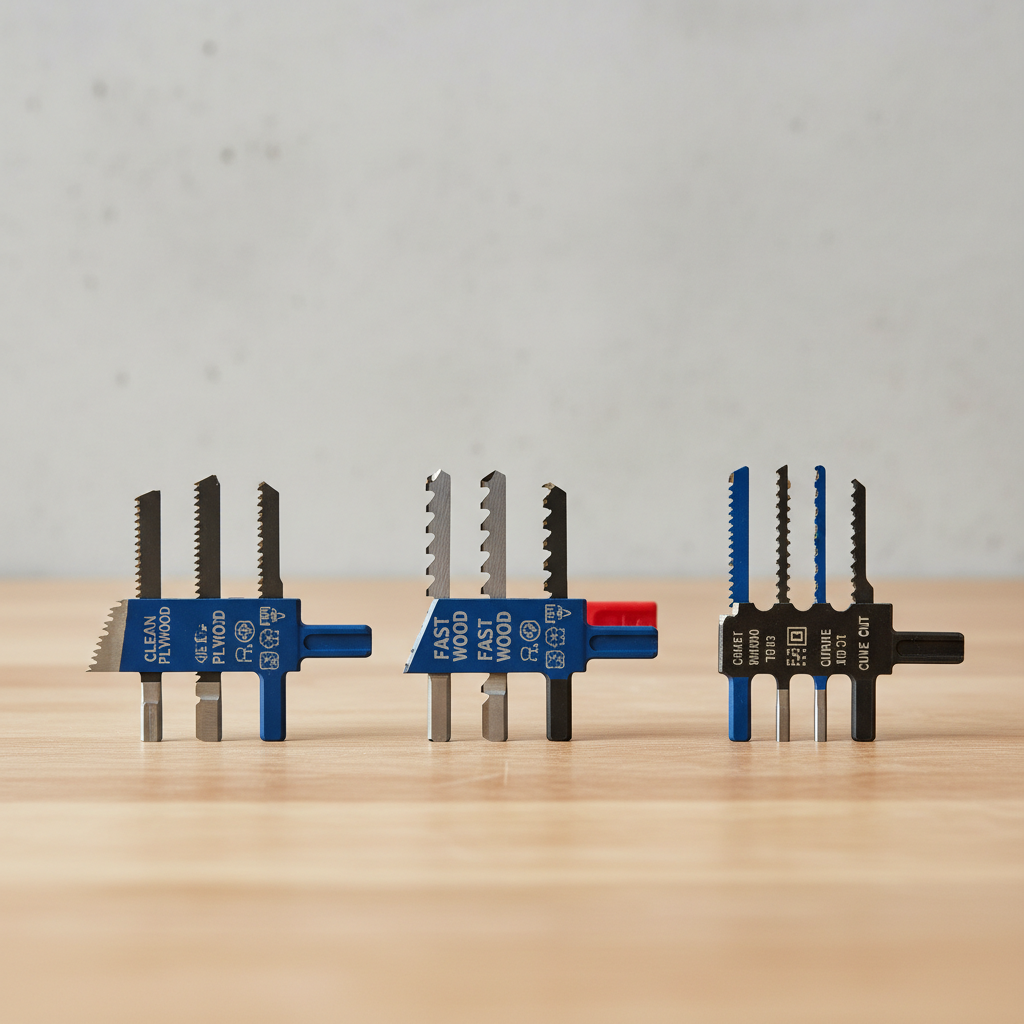
- Clean plywood/veneers: high TPI clean-cut blade, slower feed, orbital at 0.
- General wood: medium TPI, moderate speed, orbital 1–2.
- Tight curves: narrow curve-cut blade, accept slower progress and more sanding.
- Thick hardwood: thicker body blade for stiffness, lower orbital, slower pace.
2) Set orbital action intentionally
- Orbital 0 for finish cuts and laminated plywood.
- Medium orbital when you need speed and can sand later.
3) Support the work so the cut can’t “steer”
- Clamp the stock, especially near the cut line.
- Use sacrificial foam under sheet goods if you need full support.
4) Use a guide when it makes sense, not when it fights you
- For straight cuts, a straightedge guide helps, but only if the shoe stays square and the blade is appropriate.
- For curves, a guide can create false confidence, better to mark clearly and cut just outside the line.
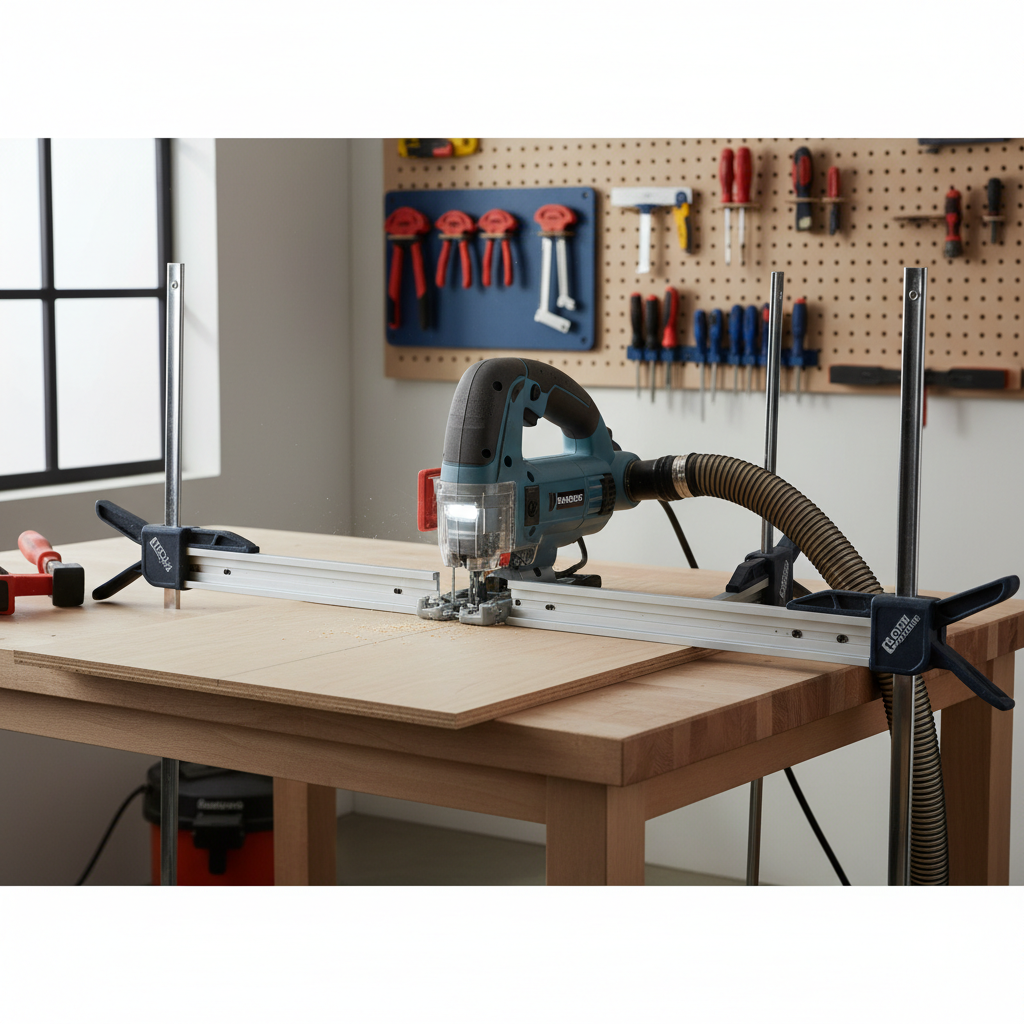
Key point: if your cut keeps wandering, slow down and switch to a stiffer blade before you start adjusting everything else, in many cases that fixes the problem faster than swapping tools.
Common mistakes that waste money (or ruin projects)
- Buying on amps alone: power helps, but control features and shoe rigidity often show up more in wood.
- Expecting one blade to do everything: jigsaw blades are consumables, keeping 3–4 types on hand usually pays off.
- Cutting on high orbital all the time: it feels productive, but it can destroy plywood edges.
- Ignoring bevel calibration: if your shoe is slightly off, every “straight” cut becomes a fit-up problem.
- Free-handing critical lines: when the cut matters, use a template, guide, or leave material for a flush-trim bit.
Also, don’t underestimate ergonomics. A jigsaw that cramps your wrist will quietly make your cuts worse, you start fighting the tool, then you push harder, then the blade bends.
Conclusion: choosing the best jigsaw for woodworking projects
The best jigsaw for woodworking projects is the one that stays controllable in your most common cuts, with the right blades and a setup you’ll actually repeat. In 2026, it’s worth prioritizing stability, visibility, and dust management over chasing peak stroke rates.
If you want a simple next step, pick one project you do often, trace what goes wrong when the cut disappoints, then match features and blade types to that problem. That approach almost always beats buying the “top-rated” model and hoping it magically fixes technique or setup.
Action ideas: build a small blade kit for plywood, curves, and thick stock, then test your orbital and speed settings on scrap before the next real cut.