
Compression tester for gasoline engines is one of the quickest ways to turn “it runs rough” into a real diagnosis, especially when a car has a misfire, low power, hard starts, or oil use that keeps getting worse.
Most people only think about compression after they’ve already thrown parts at the problem, plugs, coils, injectors, sensors, and the issue still hangs around. A simple compression check often tells you whether you’re dealing with spark/fuel problems or a mechanical sealing problem inside the engine.
This guide walks through what a gasoline compression tester does, how to use it correctly, how to read the numbers, and when a second test like a leak-down check makes more sense than guessing.
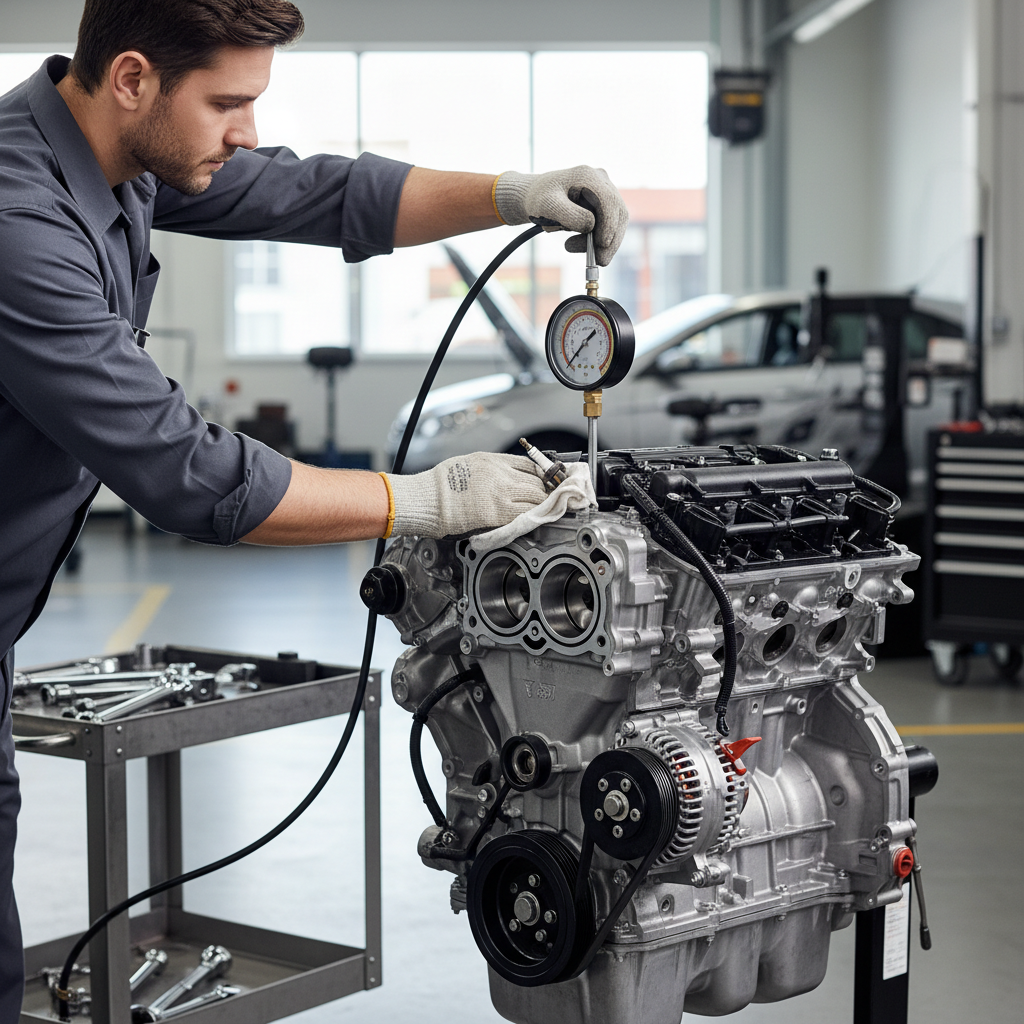
What a gasoline engine compression tester actually tells you
A compression tester measures how much pressure a cylinder can build while the engine cranks. That pressure depends on how well the cylinder “seals” during compression, mainly from the piston rings, valves, and head gasket.
It doesn’t directly tell you which part failed, but it does answer a critical question fast: Is the engine mechanically capable of making power? If compression is consistently healthy, you can usually focus on ignition, fuel delivery, timing, or air leaks. If it’s low or uneven, you’re looking at internal engine issues or valve timing problems.
According to SAE International, cylinder pressure testing is a standard diagnostic approach for evaluating engine condition, because it helps distinguish mechanical faults from control-system faults in many common drivability complaints.
When you should run a compression test (and when you can wait)
Use a compression test when symptoms point to one or two weak cylinders, or when you suspect the engine’s overall condition.
Common situations where the test pays off
- Persistent misfire on one cylinder (even after plug/coil swap)
- Hard starting, especially after sitting, with no clear fuel pressure issue
- Noticeable power drop, rough idle, or shaking under load
- Oil consumption or exhaust smoke that “doesn’t match” a simple PCV issue
- Overheating history, coolant loss, or milky oil, where a head gasket is on the table
When it might be overkill
- Obvious ignition problem you already confirmed (no spark, broken coil connector)
- A clear fuel supply issue (no fuel pressure, clogged filter) where the engine won’t fire at all
- Battery too weak to crank consistently, because results become misleading
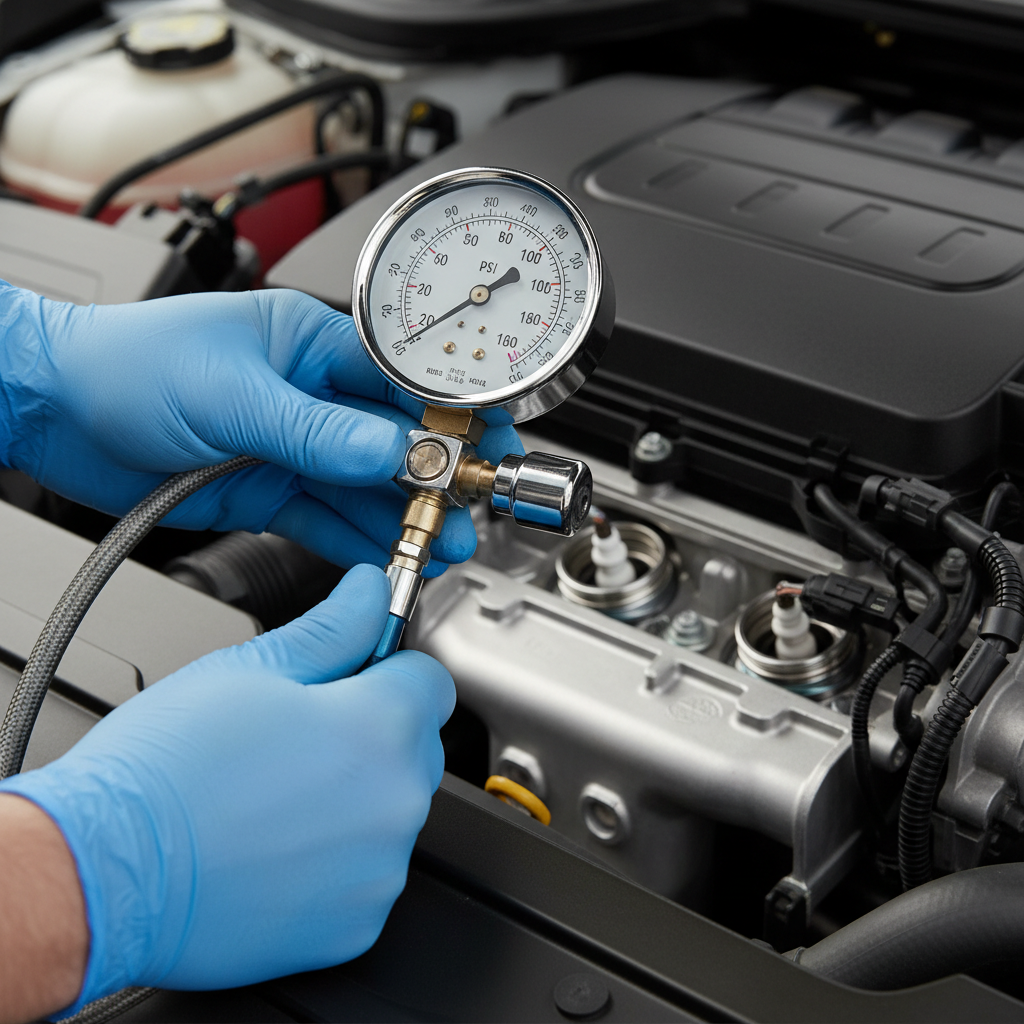
Quick self-check: are your symptoms likely “compression-related”?
If you’re deciding whether to buy/borrow a tester or book a shop, this quick checklist usually helps.
- Misfire stays on the same cylinder after swapping plug and coil
- Wet spark plug that looks oil-fouled (not just fuel-wet)
- One cylinder reads “dead” on a scan tool’s misfire counter
- Cranking sounds uneven, like the engine speeds up and slows down while starting
- Compression-like behavior under load: smooth at idle, weak on hills
If you check two or more boxes, a compression tester for gasoline engines is usually a sensible next step before buying more parts.
How to use a compression tester for gasoline engines (step-by-step)
The basic job is simple, but the accuracy depends on setup. Small mistakes, weak battery, wrong throttle position, inconsistent cranking time, can create “bad” numbers on a healthy engine.
Tools and prep
- Compression gauge with the correct spark plug thread adapter
- Fully charged battery or a jump pack
- Spark plug socket, ratchet, extensions
- Optional: a scan tool to disable fuel or clear codes afterward
Test procedure that tends to produce consistent results
- Warm the engine if possible, many engines seal better warm, but if it won’t run, test cold and note that.
- Disable fuel and ignition so it won’t start while cranking. (Method varies by vehicle: fuel pump relay, injector connectors, fuse, scan tool command.)
- Remove all spark plugs, this helps cranking speed stay even across cylinders.
- Thread the hose into cylinder #1 by hand until snug, don’t cross-thread.
- Hold the throttle wide open while cranking, on many vehicles this reduces intake restriction and stabilizes readings.
- Crank the engine the same number of compression strokes each time, commonly 6–10 “puffs” on the gauge, then record the peak PSI.
- Repeat for every cylinder, write results in order.
If you’re doing this at home, keep safety in mind, avoid loose clothing near belts/fans, and if you’re unsure how to disable fuel safely, it’s reasonable to ask a qualified technician.
How to interpret compression numbers (PSI) without overreacting
People get hung up on one “perfect” PSI number, but real diagnostics are more about balance between cylinders and repeatability. Exact specs vary by engine design, altitude, cam timing, and gauge type.
Rule-of-thumb interpretation
- Even readings across cylinders usually matter more than a high number.
- One low cylinder points toward a localized issue: valve sealing, ring wear, head gasket edge failure.
- Two adjacent low cylinders can suggest a head gasket leak between them, though not always.
- All cylinders low might be a timing issue, wrong test method (throttle closed), or a tired engine overall.
Simple results table you can copy
| Cylinder pattern | What it often suggests | Smart next step |
|---|---|---|
| All cylinders similar | Mechanical condition likely OK | Focus on spark, fuel trim, vacuum leaks, timing data |
| One cylinder notably lower | Valve, ring, or localized gasket issue | Run a wet test, then consider leak-down |
| Two adjacent cylinders low | Possible head gasket path between cylinders | Cooling system checks, leak-down, look for cross-contamination |
| All cylinders low | Test method, cranking speed, or valve timing | Retest with open throttle, verify battery, check timing if symptoms fit |
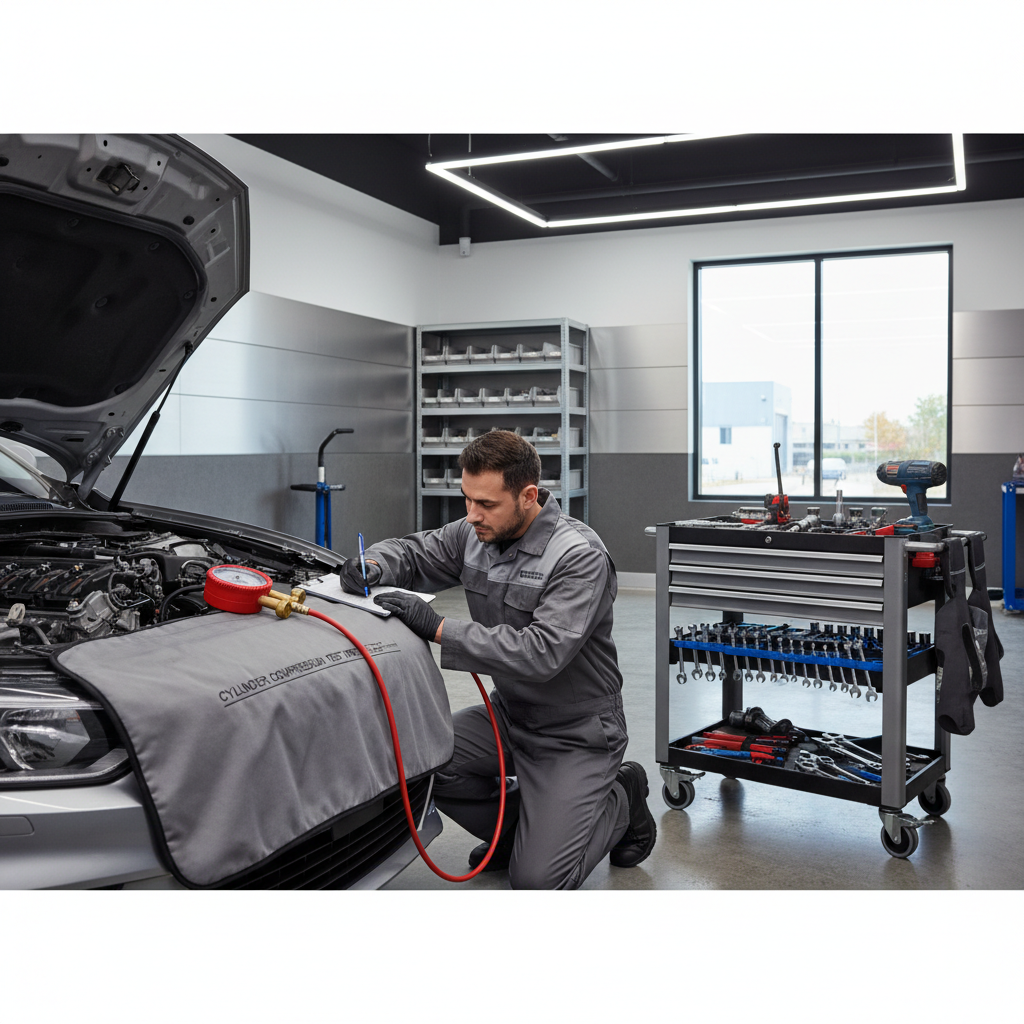
Wet test vs. leak-down: what to do when one cylinder is low
If a cylinder reads low, don’t stop there. A quick follow-up can narrow the cause without tearing anything apart.
Wet compression test (quick clue, not a final verdict)
Add a small amount of clean engine oil into the low cylinder, then repeat the test. The oil can temporarily improve ring sealing.
- Compression jumps noticeably: ring wear or cylinder wall issues become more likely.
- Compression barely changes: valves or head gasket become more likely.
Go easy on the oil quantity, too much can skew results and in some cases cause cranking resistance.
Leak-down test (more precise, a bit more setup)
A leak-down test feeds compressed air into a cylinder at top dead center and measures how fast it leaks, plus where it leaks. You listen at the intake, exhaust, crankcase, and cooling system for clues.
According to AA1Car, leak-down testing is commonly used to locate where cylinder sealing is failing, which is why many shops follow a compression test with leak-down when readings look suspicious.
Choosing the right tester: what matters (and what’s just marketing)
Any decent gauge can be useful, but a few features make real-world work less frustrating.
- Threaded hose adapters beat rubber press-in tips for repeatability on most modern engines.
- Long hose and swivel helps on tight transverse engine bays.
- Readable gauge and solid check valve makes it easier to catch peak pressure.
- Kit includes multiple spark plug thread sizes, important if you work on more than one vehicle.
If you only need a compression tester for gasoline once, borrowing from a parts store loaner program can be a practical move. If you diagnose often, consistency matters more than saving a few dollars.
Common mistakes that create “bad compression” on a healthy engine
- Throttle closed, engine can’t breathe, numbers drop.
- Battery weak, cranking speed slows, readings fall and vary by cylinder.
- Testing with plugs still installed, cranking speed differs, comparisons become messy.
- Not disabling fuel, cylinders can wash down with fuel, changing sealing and risking fire.
- Mixing cranking time, one cylinder gets 10 strokes, another gets 6, then you chase a fake problem.
Key takeaways: prioritize even cranking speed, open throttle, same number of strokes, and clean notes. Those four things prevent most false alarms.
Conclusion: what to do after you get your readings
If your numbers look even, treat that as good news, it usually means your next hour is better spent on ignition/fuel/air diagnostics instead of engine teardown anxiety. If one or more cylinders show low compression, confirm with a wet test and consider a leak-down test before buying major parts.
If you want one action today, run the test again with the same method and a strong battery to confirm repeatability. Consistent results, even if they’re not pretty, are what lead to a sane repair plan.
FAQ
What PSI should a gasoline engine compression test show?
It depends on the engine and how you test, so the better target is consistency. Many healthy engines show readings that are relatively close cylinder-to-cylinder, and service information for your vehicle is the safest reference.
Can a compression tester diagnose a head gasket?
It can suggest it, especially with two adjacent low cylinders or compression that changes oddly after overheating, but it won’t prove it alone. Pairing compression results with coolant checks and possibly a leak-down test is usually more convincing.
Do I test compression with the engine warm or cold?
Warm testing often reflects real sealing better, but cold testing still has value when the vehicle won’t run. The important thing is noting the condition and keeping the method consistent across cylinders.
Why are all my cylinders reading low?
Sometimes it’s a tired engine, but very often it’s test setup: closed throttle, slow cranking from a weak battery, or a gauge/hose issue. Retest with a known-good battery and wide-open throttle before assuming worst-case.
Is a leak-down test better than a compression test?
Leak-down can be more specific because it helps locate where air escapes, but it requires an air compressor and correct piston positioning. In practice, many people use compression as a quick screen, then leak-down for confirmation.
Can I do a compression test without removing all spark plugs?
You can, but comparisons become less reliable because the engine cranks slower with other plugs installed. If you’re chasing a subtle misfire, removing all plugs usually saves time in the long run.
Will a compression test hurt my engine?
Usually it’s low risk when done carefully, but mistakes like leaving fuel enabled or cross-threading an adapter can cause problems. If you’re not comfortable disabling fuel/ignition or working around hot components, a shop visit is a reasonable call.
If you’re trying to sort out a misfire or low power and want a more straightforward path than swapping parts, a quality gauge setup and a repeatable method make the compression tester for gasoline engines genuinely useful, and if the results point to internal wear, a trusted local technician can help confirm with leak-down and outline realistic repair options.